AI workflow architecture
Map the decisions, knowledge, tools, and approval points inside a messy workflow—then design a bounded system people can actually own.
Agent rolesHuman reviewTool routing
Independent studio · Select engagements
I design and build AI-enabled workflows, knowledge systems, and products that people can understand, evaluate, and own.
Claims are scoped to the artifact and proof available. No inflated scale, adoption, or autonomy language.
01 / Selected work
These cases show how product judgment, AI architecture, source discipline, and evaluation come together. Each one states what exists and where the evidence stops.
01 / proof surface
A shipped, cross-device product and surrounding workflow that turns low-friction capture into durable, user-owned context for people and the agents they choose.
02 / proof surface
A versioned operating architecture for routing work across models, tools, knowledge sources, and devices without hiding the moments that still require human judgment.
03 / proof surface
A source-and-routing system for Apple and spatial development that distinguishes authority, experiments, and real build evidence before information reaches product work.
04 / proof surface
A recorded speech-recognition comparison used a Mac and DGX Spark as complementary tools, then carried the selected approach into UtterFlow and AirSticky with build verification.
05 / proof surface
An iPhone-first workspace that keeps a complete construction plan set intact while letting a person assemble the drawings, checks, and notes needed for the work in front of them.
06 / proof surface
A deployed web surface and broader product system exploring job-call intelligence, comparison tools, recurring source workflows, alerts, and structured learning paths.
02 / Consulting
Bring a workflow, product idea, source problem, or model decision. The engagement starts by making the actual constraint visible—not by forcing a generic AI layer onto it.
Map the decisions, knowledge, tools, and approval points inside a messy workflow—then design a bounded system people can actually own.
Turn scattered documents and source material into governed context with clear authority, provenance, retrieval paths, and acceptance rules.
Move from an ambiguous idea to a working web or Apple-platform artifact with the problem, constraints, evidence, and next decision visible.
Compare where models and workloads belong across local, cloud, and dedicated compute—using a real task and an explicit test instead of a tool preference.
A practical starting point
03 / Product practice
A working line of Apple-platform products and focused tools. Current App Store titles are separated from work still in development.
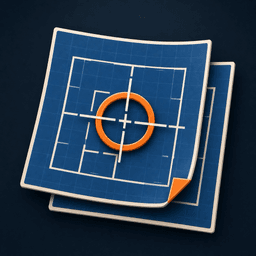

The plans you need. One field board.
FieldStack is an iPhone-first workspace for large construction PDFs. Read the complete plan set, stack the relevant sheets into one zoomable board, search the drawings, and add structured field checks and notes without changing the source files.


Play at home.
Stream your PS5 on your home network with a native visionOS player and compatible controller support.

Voice, live captions, and Persona—together. No external mic needed.
Speak naturally and UtterFlow turns your words into readable spatial captions beside your live Persona. Place captions above, below, or over the presenter; match the surface to your scene; then teach, demo, review, or think out loud alongside any other app.


Private capture for the agent era.
Capture a thought by voice, text, or photo on iPhone, Apple Watch, or Mac. On the Mac, talk instead of typing — your words land right where your cursor is, in any app. Everything saves as plain Markdown in folders you control, structured so your own AI agents can read it. No account, no cloud we own, no tracking. The more you capture, the more your local agents understand you.


Your living library
Vellora turns files you already own into a private reading and listening library. Import PDFs, web articles, pasted text, and owned audio files; keep the original source; listen offline; follow along with chapters and transcripts; and save notes, quotes, and bookmarks back to the book.

Create in every dimension
Draw in three dimensions on Apple Vision Pro with 37 brushes, 8 materials, layers, and symmetry. Sketch with your hands or your eyes, then export your creations as USDZ models — all fully on device.

Your spatial link launcher
Save links, organize them into constellation workflows, and launch everything with a single tap. On Apple Vision Pro, your portals appear as glowing orbs floating in your space.

A calm focus timer for Apple Vision Pro
Choose your duration. Twenty luminous orbs orbit gently in your space. Each minute, one rises and dissolves with a soft chime. When the last orb leaves, your session is complete — you never look at a clock.

Spatial sticky notes with voice
Capture quick notes by voice or text and pin them anywhere in your space on Apple Vision Pro. Your thoughts stay exactly where you left them — on the wall, the desk, beside the window.


Every note creates a ripple
Sweep across seven luminous water strings. Each note falls as rain, spreads through the basin, and helps grow a living musical watershed that remembers how you played.
 In development
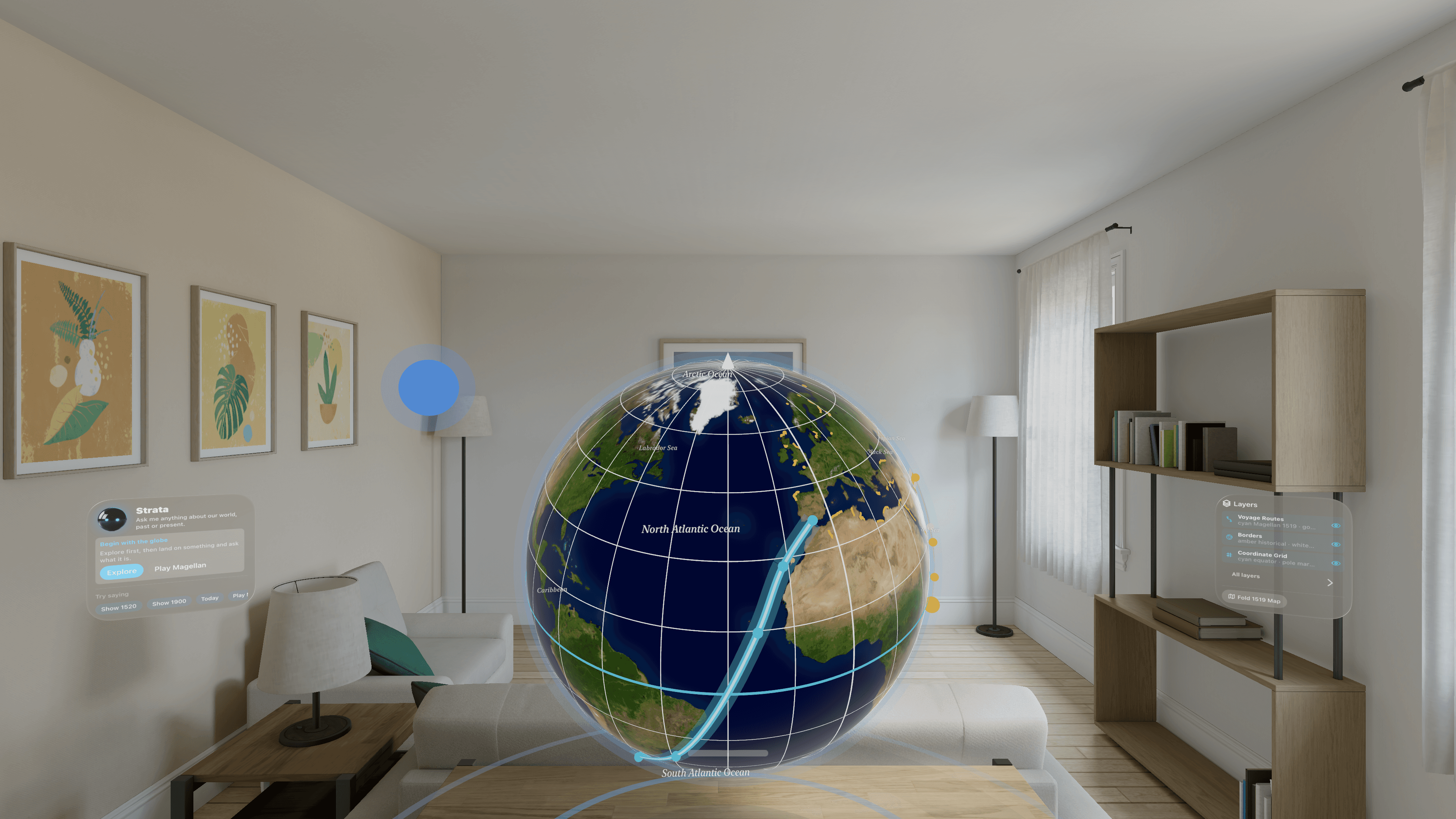
Spatial Story Engine
Worldline Arc turns Earth into a source-backed spatial story engine for visionOS. Stand beside a living globe, move through time, follow narrated journeys, and inspect the maps, sources, and context behind each story.


Make anything traceable
SpatialTrace is a native Apple Vision Pro workspace for isolating one or more subjects from an image, refining them into clear outlines, setting an intended physical size, and placing the guide on a real surface. The development build now includes ARKit plane placement and a saved WorldAnchor lock-and-recovery path; true-scale accuracy, drift, occlusion, and relaunch reliability remain pending physical-headset validation.
Union work, pay, and travel
On the Books brings public job calls, wages, schedules, per diem, local context, road math, and field tools into one practical iPhone app for traveling electricians.
04 / Method
The goal is a useful system with visible assumptions and clear ownership—not a polished demo that becomes impossible to trust.
Define the operating problem, people, sources, constraints, and decision that matters.
Choose what should be deterministic, model-assisted, human-owned, or deliberately left alone.
Create the smallest complete artifact that can live inside the real workflow.
Test useful behavior, document failure and intervention, and decide what deserves to continue.
Operating principles
05 / Contact
I'm opening a small number of focused AI systems and product engagements. Tell me what is messy, what is at stake, and what a useful first result would look like.
support@unshackledpursuit.com